Need help? Call Us Now : +91-9873394324

NM Cable
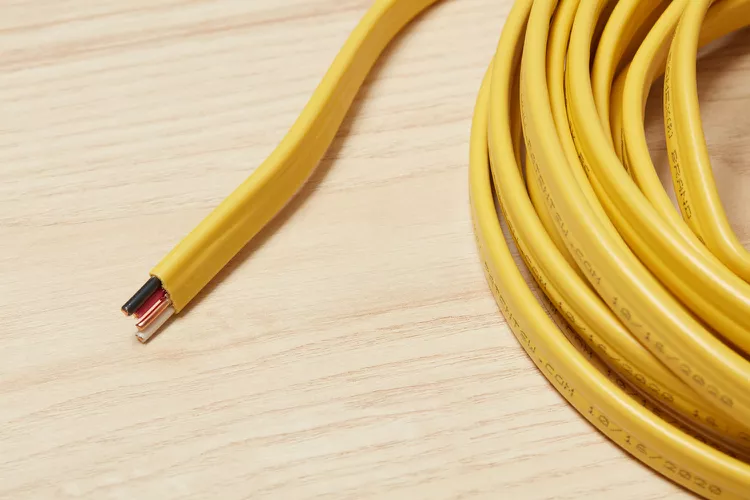
Often called “Romex” after one popular brand name, nonmetallic (NM) cable is a type of circuit wiring designed for interior use in dry locations. NM is the most common type of wiring in modern homes. It consists of two or more
individual wires wrapped inside a protective plastic sheathing. NM cable usually contains one or more “hot” (current-carrying) wires, a neutral wire, and a ground wire.
These conductors are insulated in white (usually neutral) and black (usually hot) for installation. Most NM cables have a flattened tubular shape and run invisibly through the walls, ceiling, and floor cavities of your homes.
These conductors are insulated in white (usually neutral) and black (usually hot) for installation. Most NM cables have a flattened tubular shape and run invisibly through the walls, ceiling, and floor cavities of your homes.
UF Cables
Underground Feeder (UF) is a type of nonmetallic cable designed for wet locations and direct burial in the ground. It is commonly used for supplying outdoor fixtures, such as lampposts. Like standard NM cable, UF contains insulated
hot and neutral wires, plus a bare copper ground wire. But while sheathing on NM cable is a separate plastic wrap, UF cable sheathing is solid plastic that surrounds each wire.
This type of electrical wire is also a bit more expensive than NM wire because of its durable insulation. UF cable is normally sold with gray outer sheathing.

THHN/THWN Wire
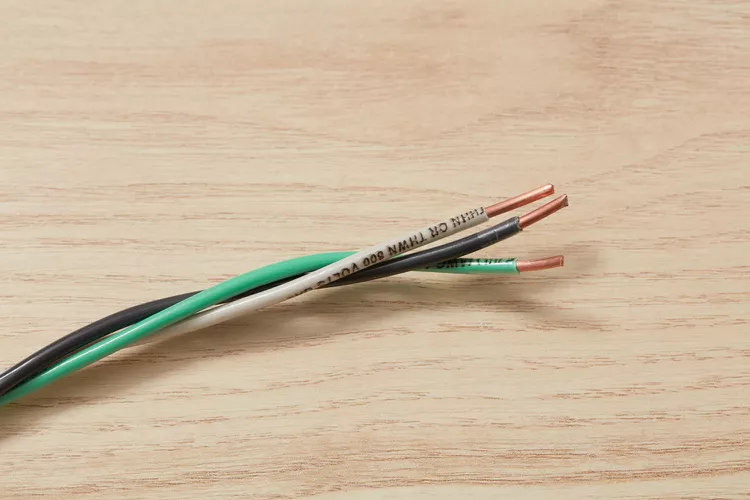
THHN and THWN are codes for the two most common types of insulated wire used inside conduit. Unlike NM cable, in which two or more individually insulated conductors (copper or aluminum) are bundled inside a plastic sheathing,
THHN and THWN wires are single conductors, each with its color-coded insulation. Instead of being protected by NM cable sheathing, these wires are protected by tubular metal or plastic conduit.
Conduit is often used in unfinished areas, such as basements and garages, and for short exposed runs inside the home, such as wiring connections for garbage disposers and hot water heaters. These wires typically have similar
prices to NM wire (plus the cost of the conduit).
Low-Voltage Wire
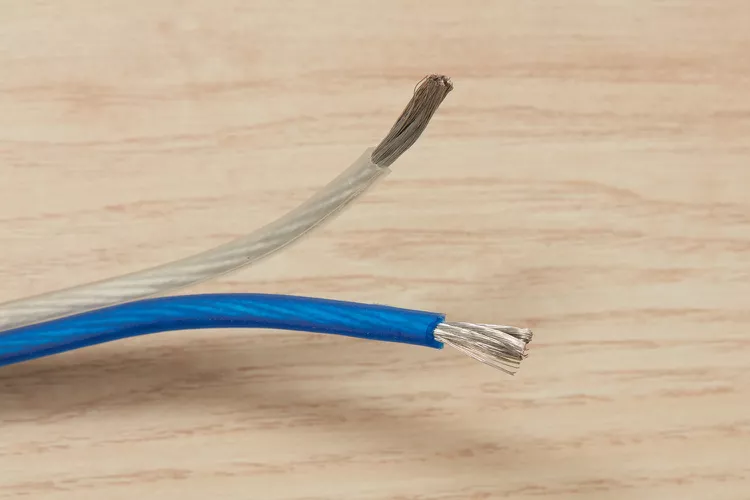
Low-voltage wiring is used for circuits typically that require minimal voltage, such as landscape lighting wires, sprinkler system connections, bell wires (for doorbells), speaker system wires, thermostat wires, or anything
else that requires 50 volts or less. Wire sizes range from about 22 gauge to 12 gauge, and these wires can be made of copper or aluminum.
Low-voltage wires typically are insulated and may be contained in cable sheathing or combined in twisted pairs, similar to lamp cord wire. These are typically very small wires that are much different from standard circuit wiring,
and their costs tend to be lower than other household wires.
Phone and Data Wire
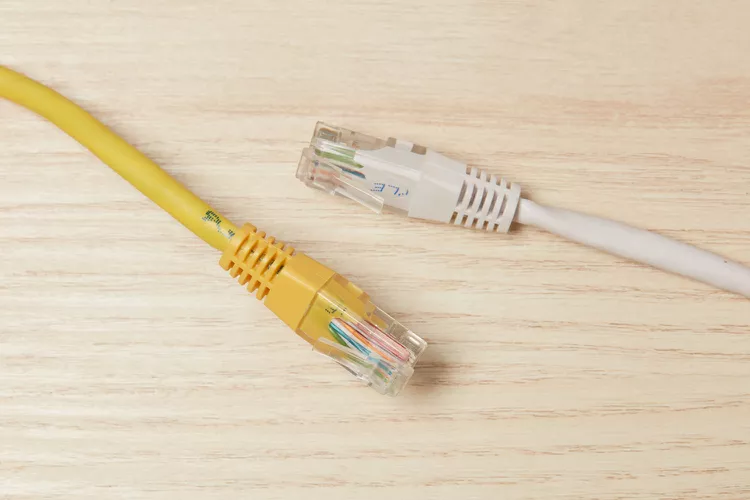
Telephone and data wiring are low-voltage wires used for landline phones and internet connections, typically made from copper. Telephone cables may contain four or eight wires, while ethernet cables (internet connection) consist
of eight wires arranged in four twisted pairs.
The most commonly used telephone and data wires are Cat 5 (category 5) cable and its more modern counterpart Cat 6, which can be used for both phone and data transmission and offer greater capacity and quality than standard
phone wire. Like low-voltage wire, ethernet cables are often cheaper than other types of household wiring like NM or UF cables.
Coaxial Cable
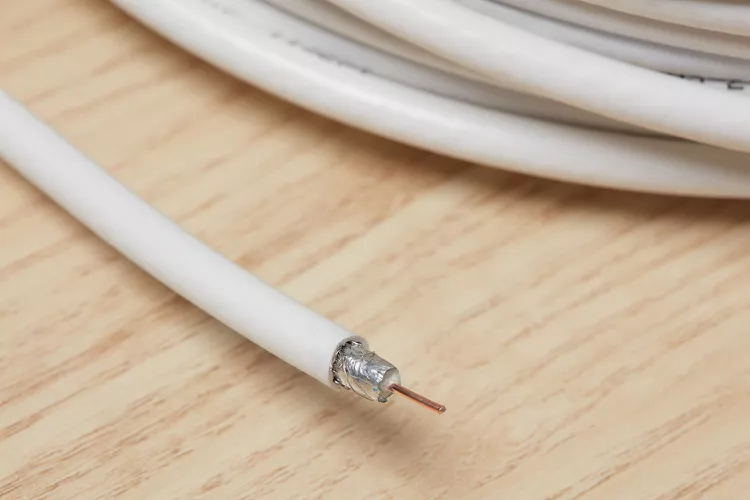
Coaxial cable, or "co-ax," is used for connecting TVs to antenna, cable services, and satellite dishes. While still used today, it's beginning to grow less common thanks to the use of other forms of data wiring, such as HDMI,
for television data transmission. The minuscule amount of voltage carried by coaxial cable signals makes it very unlikely to cause a shock of any type—provided the cables are not in contact with another source of current.
Coaxial cable is a round, jacketed cable that features an inner conductor (usually copper) surrounded by a black or white tubular insulating layer, surrounded by a tubular conducting shield made of braided wire. It can be identified
by the threaded connectors that are used to make unions and device hookups.
Speaker Wire
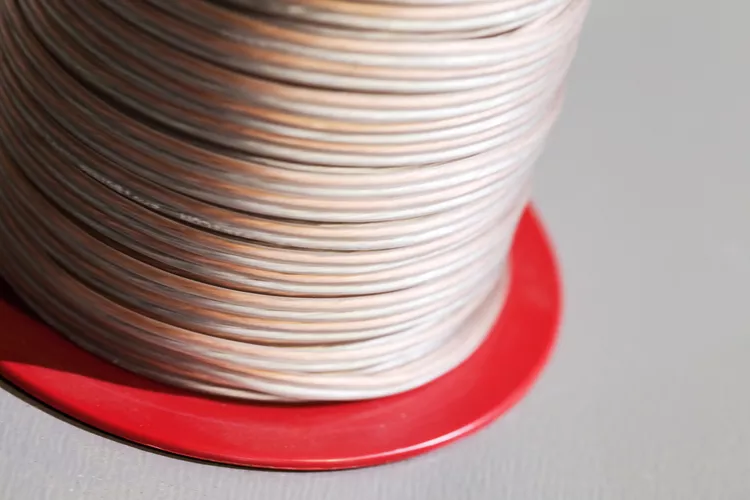
Speaker wire is a simple two-conductor strand consisting of wires individually wrapped in plastic. Though connected, they can easily be separated by hand. There is no difference between the two wires electrically speaking,
but one or both wires will often feature some type of marking to make them more easily traceable over a distance. This helps ensure proper polarity when wiring up speakers.
When choosing speaker wire, consult the manufacturer's instructions closely. Many speaker manufacturers will specify choosing larger gauge wire if running longer distances of wire or wiring up higher-ohm systems.
Ribbon Cable
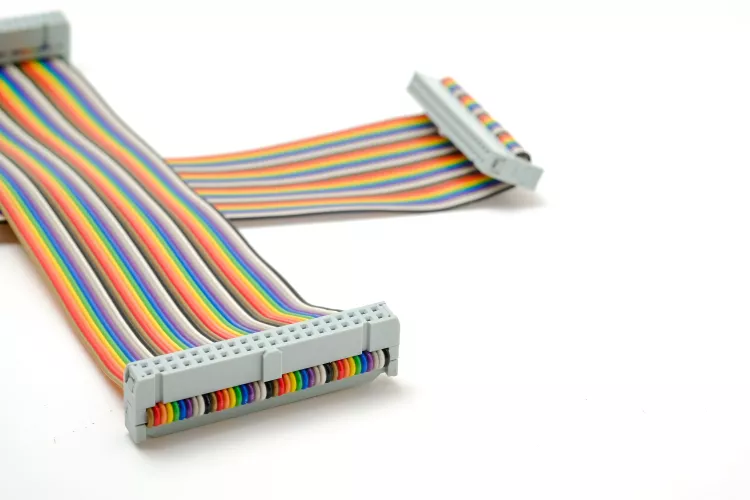
Ribbon cable is a type of wiring where each wire conductor is attached at its side, creating a flat ribbon-like wire. Much like "ribbon cable," its signature shape has earned names like "flat cable" and "multi-planar cable."
The purpose of this arrangement is to maximize the potential number of wires while minimizing the footprint, which allows for many wires to fit in tight spaces.
Ribbon cable is often used in things like appliances, computers, printers, and other electronic devices that need to move a significant amount of data within a tight housing. Flat connectors on each end allow the wire to connect
at two points while taking up a minimal amount of space.
Armored Cable
Armored cable, which you may come across in an older home renovation, is a type of wiring that features a metal jacket around the wires to protect them from damage.
Armored cable is often referred to as "BX cable," though this is technically a specific branding of armored cable. One of the purposes of armored cable's metal jacket is to eliminate the need for conduit, as the wire has its
protective layer. This cuts both material costs and labor costs.
Metal-Clad Cable
Metal-clad cables, or MC cables, are very similar to armored cables, yet with some key distinctions. Like armored cables, metal-clad cables feature metal sheathing that offers protection to the wiring, allowing it to be installed
in areas where it may be vulnerable to damage.
However, unlike armored cables, metal-clad cables feature a full-size designated ground wire, while armored cables rely on a combination of the metal jacket and a thin wire or strip for grounding.
MC cables also feature plastic sheathing around the internal wires, while armored cable uses paper. MC cables can be used indoors and outdoors, but can only be used in damp or wet locations when fitted with an outer PVC jacket
and properly installed with fittings rated for wet locations. When in doubt, consult your local building codes before installation.